Samyang Marketing Strategy: How Ingratiation Psychology Sold Buldak Ramen
Explore how Samyang’s viral marketing strategy used social psychology and ingratiation to turn Buldak noodles into a global ramen sensation. Learn more here.
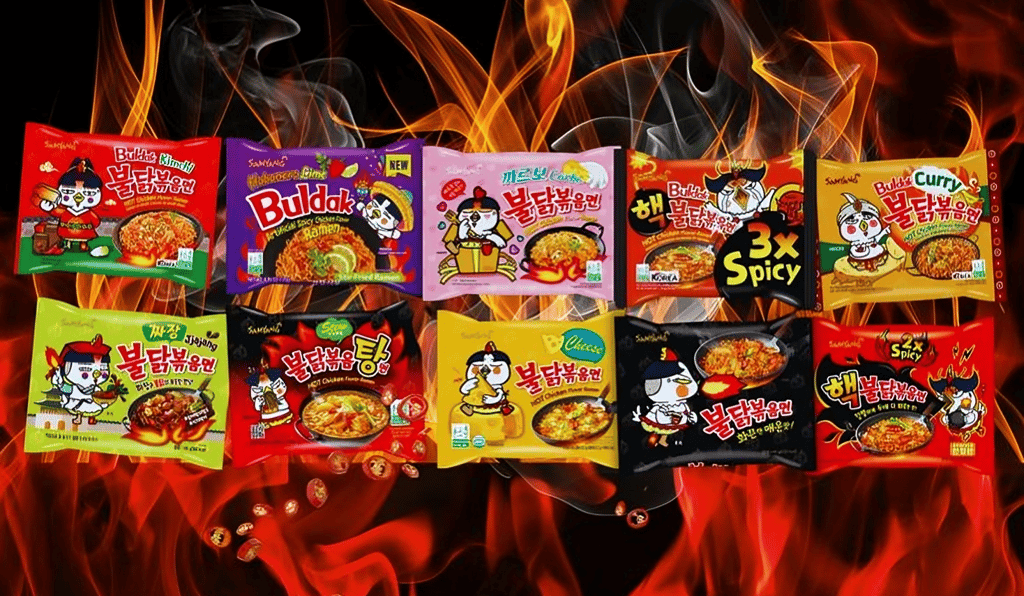
The global food industry is a hyper-competitive landscape where taste is often commoditized. Yet, Samyang Foods, a South Korean noodle manufacturer established in 1961, has emerged as a "deviational anomaly". By 2024, Samyang didn't just reverse its fortunes; it surpassed its primary rival, Nongshim, in operating profit, driven by a staggering 133% year-over-year profit surge.
While product innovation played a role, the true driver of this success is a sophisticated application of social psychology: specifically, Ingratiation Theory.
What is Ingratiation? The Social Psychology of Brand Love
In psychology, ingratiation is a strategic attempt to influence a target by becoming more attractive or likeable to them. While traditionally used in interpersonal dynamics, Samyang has operationalized this theory into a multi-billion-dollar marketing strategy.
By utilizing the four pillars identified by psychologist Edward E. Jones: Other-Enhancement, Opinion Conformity, Self-Presentation, and Favour Rendering, Samyang has converted a biological reaction to spice into a global sociological phenomenon.
1. Other-Enhancement: Flattery via the Fire Noodle Challenge
The first pillar, Other-Enhancement, involves using flattery to bolster a target's self-concept. Samyang does not just market flavour; it markets the consumer’s resilience.
Ego Validation: The viral "Fire Noodle Challenge" serves as a test of endurance. By consuming the noodles, customers demonstrate "bravery" and "strength".
Brand Affirmation: Samyang reinforces this by using labels like "Legend" and "Brave" in its marketing rhetoric, effectively flattering the consumer for their physical "resilience".
The Texas "Pink Truck" Event: In 2024, Samyang America mobilized a full-scale activation for a young girl whose TikTok video of receiving Buldak Carbonara went viral. By treating a single fan like a celebrity, the brand validated her passion and flattered its entire global customer base.
2. Opinion Conformity: Aligning with Global Cultural Values
Opinion Conformity involves expressing agreement with a target's beliefs to create a sense of similarity. Samyang’s global marketing campaign relies on extreme agility in conforming to local norms.
Religious Alignment: To capture the Indonesian market, Samyang didn't just label products; they altered their supply chain to secure Halal certification. This signalled a profound agreement with the consumer that religious values are non-negotiable.
Generational Conformity: For Gen Z and Gen Alpha, Samyang shifted its slogan to "Play Buldak," conforming to the youthful opinion that food is not just for eating, it is content for social media.
Metaverse Integration: By launching "Buldak World" on the Zepeto metaverse, Samyang meets younger consumers in the digital realm where they already live
3. Self-Presentation: Building the "Rebel" Brand Persona
Self-Presentation is the curation of one's own attributes to appear more attractive. Unlike traditional competitors who focus on "heritage," Samyang presents itself as a "Rebellious Challenger".
Hochi the Mascot: The mascot "Hochi" is the anthropomorphic agent of this strategy. Confident and "slightly chaotic," Hochi acts as the friend who dares you to take the spice challenge.
"Spicy or Nothing": This slogan declares uncompromising standards, attracting consumers who want to associate with "the best" or "the most extreme".
The Denmark Recall Win: When Denmark recalled Buldak for being too spicy in 2024, Samyang reframed the crisis into a self-promotion victory. They used the government ban as third-party verification that their noodles were the most "extreme" on the market.
4. Favour Rendering: Reciprocity through the "Splash Buldak" Campaign
The final pillar, Favour Rendering, relies on the norm of reciprocity: performing a helpful act to gain goodwill.
The Sauce Exchange: In late 2024, the "Splash Buldak" campaign invited consumers to trade any boring leftover sauce packet for a full bottle of Buldak Hot Sauce.
Creating Value: This is a clear "favour", the consumer gives up trash and receives a premium product. This generates immense goodwill and lowers the barrier to trial, making consumers statistically more likely to repurchase in the future.
Conclusion: The Financial Power of Being "Liked"
Samyang’s shift from a domestic player to a global powerhouse is visible in the data. By 2024, Samyang recorded an operating profit of over 350 billion KRW, doubling its previous year’s performance and surpassing Nongshim in profitability per unit.
By operationalizing social psychology, Samyang has moved beyond selling a commodity (noodles) to selling a feeling: the feeling of being seen, validated, and part of a global "tribe". In today’s attention economy, the most effective marketing strategy isn't just to make the customer hungry, it’s to make the customer feel liked.