The "Yes" Ladder: How Saie Beauty Uses Psychology to Dominate the Clean Beauty Market
We deconstruct Saie Beauty’s funnel to reveal how asking for small favours leads to big revenue, and why tiny requests can trigger massive buying behaviour.
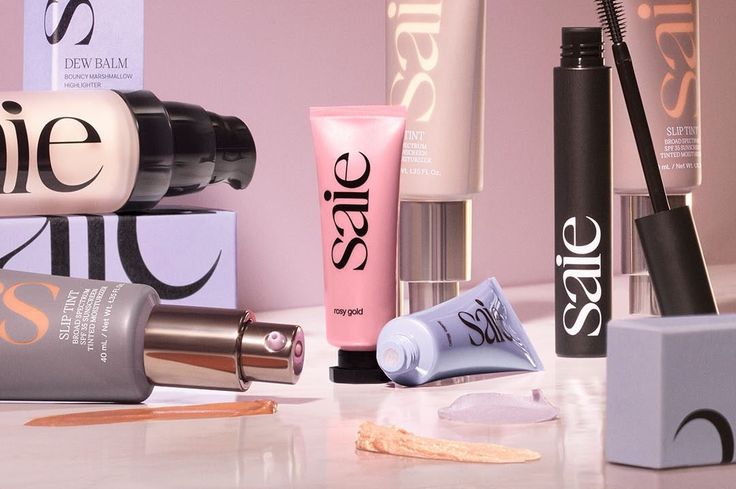
In the crowded world of direct-to-consumer (DTC) beauty, most brands compete by shouting. They bombard us with "Buy Now" buttons, flash sales, and aggressive retargeting. But Saie Beauty, the "clean" cosmetics brand founded by Laney Crowell, takes a different approach. They don't shout; they whisper. And more importantly, they get us to whisper back.
Saie's meteoric rise isn't just about good aesthetics or "super clean" ingredients. It is a masterclass in behavioural architecture, specifically a psychological compliance tactic known as the Foot-in-the-Door (FITD) technique.
Here is how Saie systematically turns strangers into superfans by asking for small "yeses" before ever asking for the sale.
The Psychology: What is Foot-in-the-Door?
First formalised in 1966, the Foot-in-the-Door technique relies on a simple premise: if you can get someone to agree to a small, trivial request first, they are statistically far more likely to agree to a larger request later.
Why? Consistency. Once we perform a small action (like answering a quiz), we subconsciously adjust our self-image to align with that action. We want to be consistent with the version of ourselves we just presented.
Saie’s entire digital ecosystem is built to extract these micro-commitments.
1. The Shade Finder: A Conversation, Not a Catalogue
Buying foundation online is terrifying. It’s the ultimate friction point. Most brands solve this with filters. Saie solves it with a dialogue.
When you open their "Shade Finder," you aren't shopping; you're engaging.
The Small Request: "What is your skin range?" (Easy. Click.)
The Escalation: "What colour are your veins?" (Requires you to look at your wrist. Investment.)
The Hook: "What are your coverage goals?" (Vulnerability.)
By the time you reach the end of the quiz, you haven't just filtered a list; you’ve invested 90 seconds of effort. This is a sunk cost. When Saie asks for your email to reveal your "perfect match," you give it. Why? because you want the reward for your labour. And when they suggest the $32 Tint, you buy it, not because they sold it to you, but because it’s the logical conclusion to the process you helped create.
2. Recycling as a Loyalty Trap
Sustainability is usually a buzzword. For Saie, it’s a retention engine.
Partnering with Pact Collective, Saie encourages customers to mail in their empties. But there is a catch: you need five empty products to use the prepaid label.
This is brilliant behavioural design.
The Identity Shift: By agreeing to recycle, you identify as an "environmentalist."
The Lock-in: To maintain that identity (and use the label), you need to generate four more empty Saie bottles.
The Result: You keep buying Saie to reach the threshold.
It turns waste disposal into a collection quest, ensuring that you don't switch to a competitor who doesn't support your new "eco-friendly" habit.
3. Gamifying the "Tribe"
Saie doesn't just have followers; they have "members." Using the platform TYB (Try Your Best), they have gamified the community experience.
Instead of asking you to buy, they ask you to "Join the Community" (Free). Once inside, they ask for micro-commitments:
"Post a selfie."
"Write a review."
"Guess the new product."
Each action earns you "coins." This triggers the Ikea Effect: we love the things we work for. A user who has "earned" their discount through engagement has a 26% higher repeat purchase rate than a standard customer. They aren't just buying makeup; they are cashing in their social labour.
4. The "Clean" Consensus
Even the brand's positioning is a FITD wedge. By framing their mission as "making beauty better" and excluding "toxic" ingredients, Saie invites you to agree with a non-controversial premise: Makeup shouldn't hurt me.
Once you agree to that simple truth (the small request), rejecting Saie feels like voting for toxins. The purchase becomes a moral act, alleviating the guilt of spending money and replacing it with the virtue of "supporting the mission."
The Takeaway
Saie Beauty proves that the future of marketing isn't about the hard sell. It's about designing a ladder of small commitments. By guiding customers from a quiz to a pledge, and from a pledge to a purchase, they build something stronger than a customer base: they build a cult of consistency.