
The Cognitive Conquest: A Marketing Strategy Analysis of Dr. Squatch
Explore the Dr. Squatch marketing strategy that used the Baader-Meinhof Phenomenon and consumer psychology to scale to $100M and secure a 2025 Unilever acquisition.
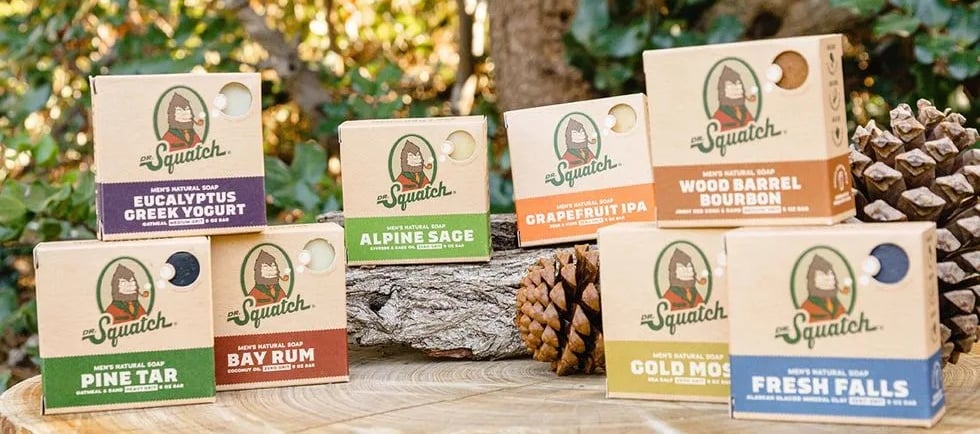

Utilizing the Baader-Meinhof Phenomenon and Consumer Psychology
Executive Preface: Cognitive Dominance in the Attention Economy
In the contemporary direct-to-consumer (DTC) ecosystem, a successful marketing plan must account for the extreme scarcity of attention. Brand marketing has shifted from gradual awareness to aggressive, psychometrically driven tactics designed to hack the cognitive psychology of a target demographic.
Among the leaders of this new "warfare for mental real estate," Dr. Squatch soap stands as a singular case study in the operationalization of cognitive bias. By scaling from $4 million to over $100 million in revenue before its 2025 acquisition by Unilever, the brand demonstrated how a marketing strategy rooted in behavioural psychology can translate into massive enterprise value.
Part I: The Theoretical Framework of Selective Attention and the Frequency Illusion
To evaluate the efficacy of Dr. Squatch, one must understand the psychological substrate of consumer purchase behaviour. Their growth is largely attributable to the systematic "weaponization" of the Baader-Meinhof Phenomenon (the Frequency Illusion).
1.1 Defining the Psychological Mechanisms
The Frequency Illusion describes a cognitive bias where an individual, after noticing a novel concept, begins to encounter it repeatedly. This operates through two interacting processes:
Selective Attention: The brain's Reticular Activating System (RAS) filters sensory input. Once a stimulus like Dr. Squatch is flagged as "novel," the brain subconsciously scans the environment for it.
Confirmation Bias: As the consumer detects new instances of the brand, they interpret this frequency as evidence of the brand's objective popularity rather than their own heightened attention.
1.2 The "Soap vs. Detergent" Paradigm
For the Frequency Illusion to initialize, there must be a high-salience "learning event". Dr. Squatch’s genius lay in reframing the category from "soap" to a duality of Natural Soap vs. Synthetic Detergent. This linguistic shift resets the consumer’s attentional filters, influencing their buying behaviour the next time they walk down a pharmacy aisle.
Part II: The Trigger - Engineering Salience through "Edutainment"
The first phase of this marketing strategy is creating a salient memory trace through edutainment, a blend of education and entertainment.
The "Bizarreness Effect" in Brand Marketing
The brand’s cornerstone "You’re Not a Dish" video utilizes the Bizarreness Effect, where incongruent material is more easily recalled.
The Disruptive Hook: Aggressive humour ("You're not a dish, you're a man!") arrests passive scrolling.
The Affect Heuristic: By using humour, Dr. Squatch associates positive emotions with the brand, making the "hard sell" of subscription bundles more palatable.
Part III: Engineering the Illusion - The Media Buying Architecture
Digital Surround Sound Strategy: Dr. Squatch creates a sensation of ubiquity by following the user across search, social, and entertainment platforms.
YouTube Awareness Engine: The brand relies on TrueView in-stream ads to create the initial "Trigger" event. High engagement rates reward the brand with lower costs and increased organic reach.
Cross-Platform Retargeting: After the initial "Trigger," a retargeting net on Meta and TikTok reinforces the frequency illusion. Users perceive the brand as "huge" because they see it across multiple platforms.
Targeting Gen Z: To maintain the illusion of growth, the brand invested $3.6 million in TikTok and saw a 22,000% growth in Snapchat Spotlight views.
Credibility Signalling: Major investments like Super Bowl ads retroactively validate digital impressions, cementing the belief that Dr. Squatch is a dominant brand marketing leader.
Conversion Optimization: The marketing strategy leverages multi-touch attribution, allowing the Baader-Meinhof phenomenon to mature over several days before a final purchase is made.
Part IV: Technological Infrastructure and Data-Driven Persuasion
Dr. Squatch leverages advanced analytics to ensure their brand marketing is both ubiquitous and efficient.
Attribution Modelling: Using tools like Northbeam, they found that a 7-day click optimization drove 6.51% more incremental revenue than a 1-day model, allowing the Frequency Illusion time to mature.
AI-Driven Personalization: They use Maverick AI to generate personalized videos, triggering the "Cocktail Party Effect" (hearing one's own name) to spike selective attention in abandoned cart sequences.
Part V: Competitive Analysis of Consumer Buying Behaviour
Analyzing the factors influencing consumer behaviour highlights how Dr. Squatch differentiates itself from rivals like Old Spice and Duke Cannon.
Old Spice vs. Squatch: While Old Spice targets the "gatekeeper" (women), Dr. Squatch targets the man directly with identity-based marketing.
Duke Cannon: While Duke Cannon wins on retail value/size, Dr. Squatch uses the Frequency Illusion to feel like the larger, more artisanal brand.
Confirmation Bias in Action: Consumers often interpret identical ingredients (e.g., sea salt vs. sodium chloride) more favourably for Dr. Squatch because they are already "sold" on the brand narrative.
Conclusion: Why This Marketing Strategy Dominates
By applying behavioral psychology to digital commerce, Dr. Squatch did not just advertise; they engineered a psychological environment. Their success proves that in the modern attention economy, understanding consumer psychology and persuasion is the key to transforming a commodity into a badge of identity.